





Two figures from the last full holiday season sit oddly together. The National Retail Federation’s final read put 2025 holiday sales up 4.1% across November and December, just over $1 trillion — the first time the season has crossed that line. In the same quarter, Challenger, Gray & Christmas reported that retailers were on track to add fewer than 500,000 seasonal positions, the smallest seasonal gain since 2009.
More volume through stores. The smallest temporary workforce in sixteen years to move it.
For 2026, NRF is forecasting 4.4% retail sales growth to $5.6 trillion, its first year using a model built with Oxford Economics. The season-specific holiday forecast normally lands in early autumn, which means brands are locking Q4 execution plans right now, before the number they will be judged against has been published. That is the practical problem this article is about.
What the hiring data actually said
The headline — lowest since 2009 — is easy to read as retail pessimism. The detail is more interesting than that, because retailers did not move in one direction.
Amazon announced 250,000 seasonal roles, flat against the prior year. Dick’s Sporting Goods went the other way and raised holiday hiring from 8,000 to 14,000. Kroger cut nearly 30%, from 25,000 seasonal employees to 18,000. Those are not three companies reading the same forecast differently. They are three different operating models: one that has automated its peak, one buying share in a category where service sells, one protecting margin in a channel where it cannot.
Challenger’s own framing was that seasonal employers face tariffs, lingering inflation and a continued shift toward automation and permanent staff, and that the season would be “more about doing more with less.”
That phrase is where the execution risk hides. Doing more with less is a defensible labour strategy. It is not, on its own, an execution strategy, because the work does not shrink when the headcount does.
The work does not shrink
Whatever the seasonal hiring number, the same physical jobs have to happen in stores between October and January.
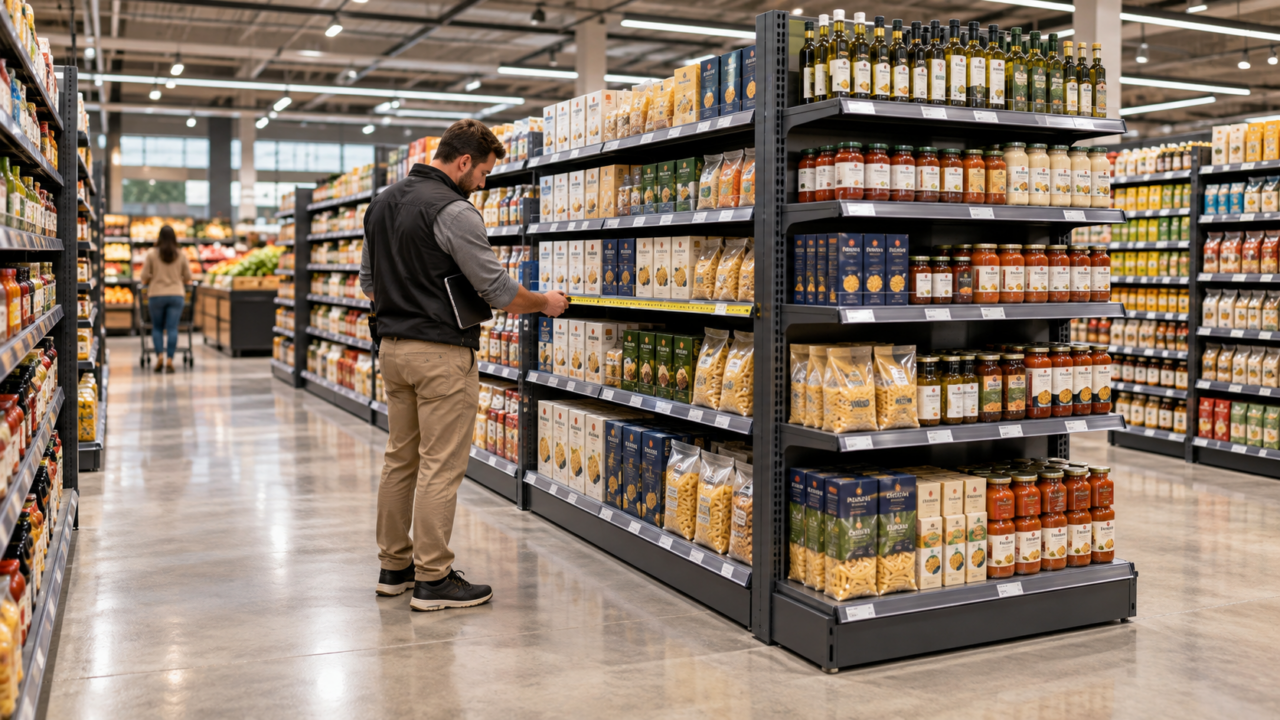
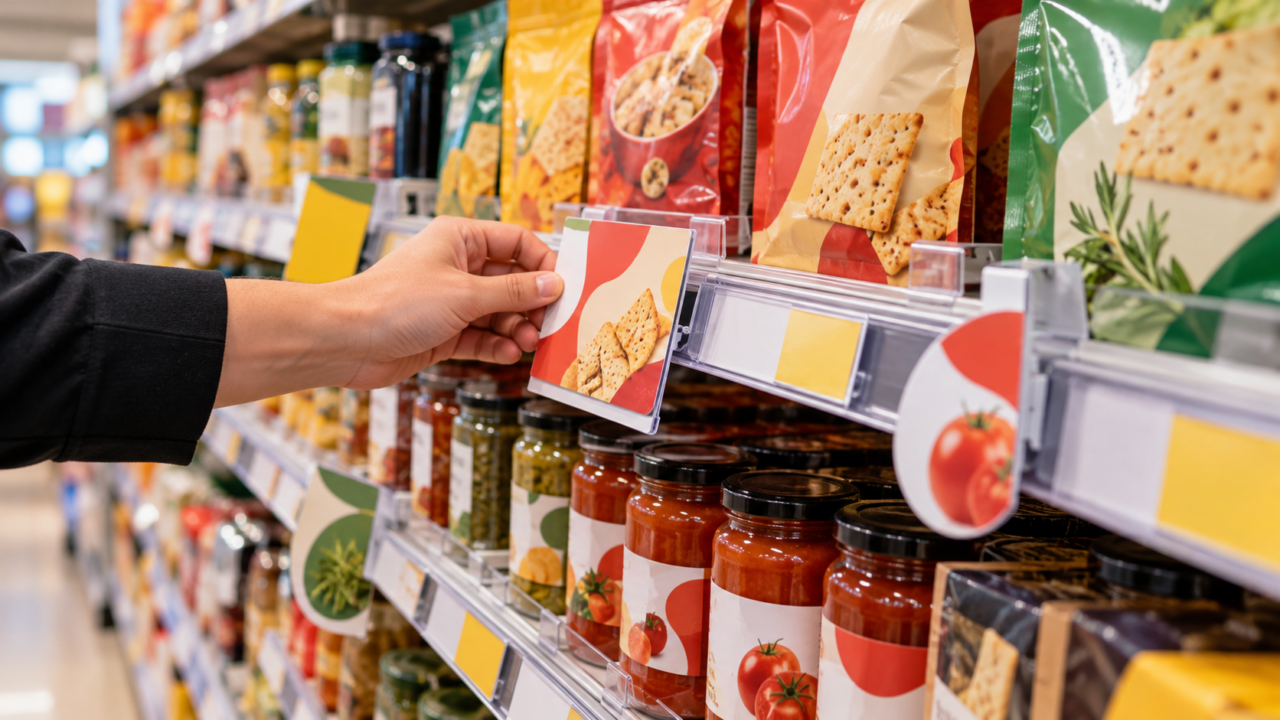
Holiday sets have to be built to a planogram, usually overnight and usually across every door in the estate inside a narrow window. Endcaps and promotional space have to be installed on the retailer’s calendar, not the brand’s. Replenishment has to keep pace with a sales rate three or four times the baseline, which is exactly when out-of-stocks cost the most. Displays get destroyed by shoppers daily and have to be rebuilt. Price and signage changes arrive mid-season and have to land the same week. And in January it all has to come out again for the post-holiday reset.
When seasonal headcount is thin, this work does not disappear — it lands on store associates who are already covering the register and the floor at the busiest moment of their year. The predictable result is compliance drift: the set goes in late, the endcap holds the wrong SKUs, the reorder does not get raised, and nobody upstream sees any of it until the sell-through report arrives in January.
Peak is decided in September
The single most common planning error is treating Q4 as a November problem. By November, the decisions that determine whether execution lands have already been made.
Planogram freeze dates come first — the point after which a change to the plan costs real money because kits are printed and crews are briefed. Fixture and signage distribution has to reach stores before crews arrive; kit that lands late turns a scheduled visit into a wasted one. Reset windows are allocated by retailers on their calendar, and a window missed is a window competed for against everyone else who missed theirs. Crew capacity has to be contracted while it still exists, because the field labour market is at its tightest precisely when everyone needs it.
Each of those has a lead time measured in weeks. Mid-September is when they stop being flexible. If you are reading this and the Q4 store-by-store plan is not yet fixed, that is the thing to fix this week — ahead of the creative, ahead of the promotional calendar, ahead of anything that happens after the product is already on the shelf.
Coverage is a different bet from headcount
Seasonal hiring is a fixed wager placed in September on a demand curve nobody can see yet. Hire for the optimistic case and you carry payroll through a soft November. Hire for the cautious case and you cannot execute the upside when it arrives — and in retail the upside arrives store by store, not evenly.
Contracted field coverage behaves differently. It is bought as scheduled visits against a defined scope, which means it can be weighted toward the stores that matter and re-weighted mid-season when the data says a region is running hot. It also arrives trained: a crew that has built sets in that banner before does not spend the first two hours of a four-hour window learning the planogram format.
This is not an argument that outsourced coverage replaces seasonal staff. Most estates need both, and the practical question is which parts of peak are predictable enough to staff permanently, which are spiky enough to contract, and which are so time-boxed — the resets especially — that they should be run as projects. Holiday retail staffing covers how those models compare; store reset services covers the project-shaped work specifically.
Build the calendar backwards
A Q4 execution calendar that survives contact with stores is built from the end date backwards, not the start date forwards.
Begin with the date the holiday set must be shoppable in every store. Work back through the reset window it needs, the crew capacity that window requires at realistic hours per store, the date kits must arrive to support it, the date the planogram must freeze to support that, and the date the store list must be final. Each step has slack or it does not, and the ones that do not are where the whole plan is exposed.
Then repeat the exercise for the two dates most brands forget: the mid-season refresh, where damaged displays and sold-through promotional space get rebuilt, and the January takedown, which competes for crews against every other brand’s takedown.
What to watch weekly through peak
Through Q4 the reporting cycle has to tighten, because a monthly view is useless when the season is nine weeks long.
Watch on-shelf availability at the store level for promoted SKUs, not the national average, which hides the failures. Watch photo-verified set compliance in the week after the reset, when correcting it is still cheap. Watch first-visit completion rate for scheduled work, which is the earliest indicator that crews or kits are under-provisioned. And watch time-to-fix on issues found in store: an out-of-stock reported on Monday and resolved on Friday cost you the weekend.
Sell-through is the outcome measure and it reports too late to act on. The execution measures are the ones that still let you change something while the season is live.
What to decide this month
Three decisions are worth forcing before the end of September. Which stores get guaranteed coverage and which get best-effort, because pretending the answer is “all of them” produces the worst version of both. Who has authority to redeploy crews mid-season when the data moves, and how quickly they can do it. And what evidence you expect back from every store visit, agreed now rather than negotiated in December when it is already missing.
None of those depend on knowing the holiday forecast. They depend on knowing your estate, and they are the difference between a season you managed and one you reported on afterwards.
Talk to our team about Q4 coverage across your footprint, or start with the holiday retail strategy guide for the full planning framework.
Frequently Asked Questions
How much did holiday retail sales grow in 2025?
NRF’s final read put November-December 2025 sales up 4.1% year over year, at just over $1 trillion — the first time the holiday season has passed that mark. The figure came from actual transaction data via the CNBC/NRF Retail Monitor rather than survey data, and landed inside NRF’s forecast range of 3.7% to 4.2%.
What is the retail sales forecast for 2026?
NRF forecasts US retail sales will grow 4.4% in 2026 to $5.6 trillion, against a 3.6% ten-year average excluding the 2020-2022 pandemic years. The forecast was published in March 2026, is the first produced with NRF’s new model built with Oxford Economics, and assumes tariffs remain near current levels. The season-specific holiday forecast is normally published later in the year.
Why was seasonal retail hiring so low in 2025?
Challenger, Gray & Christmas projected fewer than 500,000 seasonal retail positions for the final quarter of 2025, the smallest gain since 2009. It attributed this to tariff uncertainty, lingering inflation and a continued shift toward automation and permanent staff rather than large seasonal waves — a season, in its words, “more about doing more with less”.
When should Q4 retail execution planning start?
Earlier than most brands assume. Planogram freeze dates, fixture distribution, reset window allocation and crew contracting all carry lead times measured in weeks, and by mid-September they stop being flexible. By November the plan is being executed rather than written, so changes at that point are expensive or impossible.
Is outsourced field coverage cheaper than seasonal hiring?
Not necessarily, and cost is the wrong first question. Seasonal headcount is a fixed commitment made before the demand curve is visible; contracted coverage is bought as scheduled visits that can be weighted toward priority stores and re-weighted mid-season. The comparison that matters is cost per executed store visit, not hourly rate.
What execution work still has to happen during peak?
Holiday set builds to planogram, promotional and endcap installation on the retailer’s calendar, replenishment at three to four times baseline sell-through, daily display recovery, mid-season price and signage changes, and the post-holiday takedown in January. None of it scales down because seasonal hiring did.
What should we measure weekly during the holiday season?
Store-level on-shelf availability for promoted SKUs, photo-verified set compliance in the week after each reset, first-visit completion rate on scheduled work, and time-to-fix on issues found in store. Sell-through is the outcome, but it reports too late in a nine-week season to act on.
How do retailers differ in their seasonal hiring approach?
Considerably, and the spread is informative. In 2025 Amazon held seasonal hiring flat at 250,000, Dick’s Sporting Goods raised its plan from 8,000 to 14,000, and Kroger cut from 25,000 to 18,000. Those reflect different operating models — automated fulfilment, service-led category growth, and margin protection — rather than different readings of the same forecast.
T-ROC Editorial Team
The T-ROC editorial team brings 20+ years of retail industry expertise across brand ambassador programs, mystery shopping, retail merchandising, and managed technology solutions. Learn more about T-ROC.