


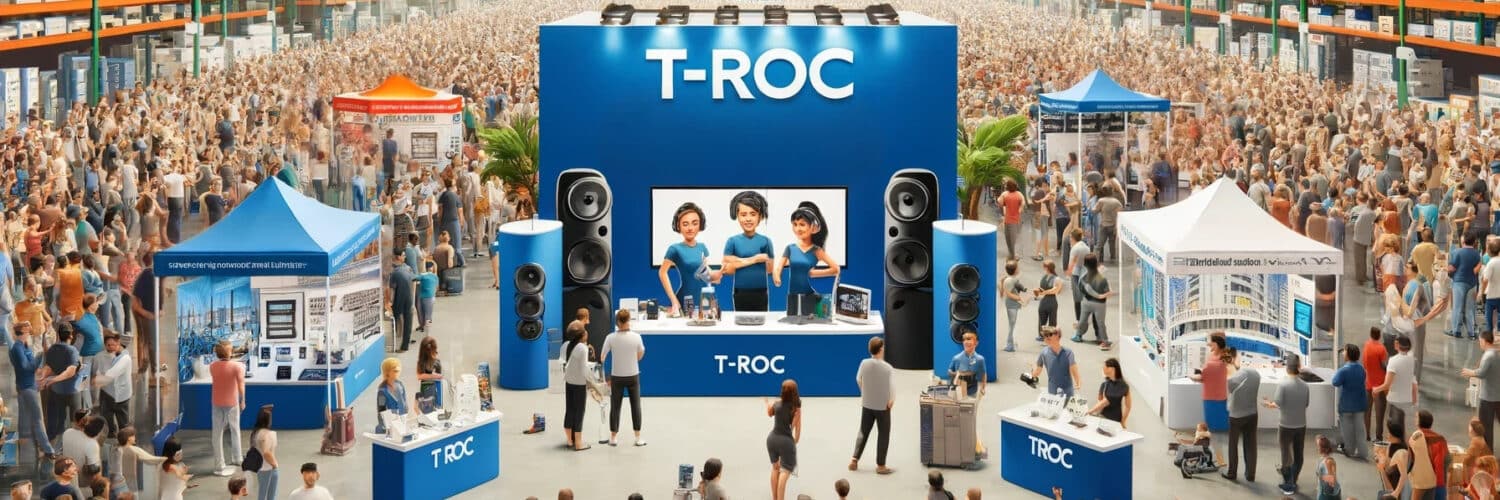
Why Roadshows and Pop-Up Events Are Dominating Retail Marketing
If you want to cut through the noise in today’s oversaturated retail landscape, there’s one strategy that consistently delivers: roadshows and pop-up events. While digital advertising costs keep climbing and consumer attention keeps shrinking, brands that show up in person—with a compelling, tactile, face-to-face experience—are winning market share, building loyalty, and generating the kind of buzz that no paid ad can replicate.
This isn’t a niche tactic anymore. From Fortune 500 consumer electronics brands to emerging DTC startups, roadshows and pop-up events have become a core pillar of modern go-to-market strategy. According to the Event Marketing Institute, 74% of consumers say engaging with branded event experiences makes them more likely to buy. That’s not a marginal lift—that’s a fundamental shift in how purchase decisions happen.
Whether you’re launching a new product, entering a new market, or simply trying to deepen customer relationships, this guide covers everything you need to plan, staff, execute, and measure roadshows and pop-up events that actually move the needle. For a broader look at how in-person brand activations fit into the retail landscape, explore our experiential retail guide.
What Is a Retail Roadshow? Definition and Types
A retail roadshow is a traveling brand activation that brings a product, service, or experience directly to consumers across multiple locations over a defined period. Unlike a single pop-up, a roadshow is designed for scale—hitting multiple cities, retail locations, or events in a coordinated campaign that builds momentum as it moves.
At its core, a roadshow is about meeting your audience where they already are. Instead of hoping customers walk into your store or click on your ad, you bring the brand to them—in a high-traffic mall, outside a major sporting event, at a wholesale club entrance, or in the parking lot of a big-box retailer.
There are several distinct types of roadshows, each suited to different goals:
- Product launch roadshows: Designed to generate buzz and trial for new products, often featuring live demos, sampling, and exclusive early-access offers.
- Educational roadshows: Focused on teaching consumers about a category or technology, common in consumer electronics, health and wellness, and financial services.
- Seasonal campaign roadshows: Timed around holidays, back-to-school, or other peak retail seasons to capture high-intent shoppers at the moment of decision.
- Trade and wholesale roadshows: Targeted at retail buyers and decision-makers rather than end consumers, often used by CPG brands to secure shelf space or negotiate promotional placements.
- Hybrid digital-physical roadshows: Combining in-person activations with live-streaming, social media integration, and QR-code-driven digital experiences to extend reach beyond the physical footprint.
Understanding which type aligns with your objectives is the first step toward building a roadshow that delivers real ROI. To learn more about how these events connect to a broader brand strategy, read our overview of what is experiential retail and why it matters now more than ever.
Pop-Up Events vs. Roadshows: Key Differences
While people often use the terms interchangeably, roadshows and pop-up events serve different strategic functions. A pop-up event is typically a single-location, temporary retail experience. It might last a weekend, a week, or even a few months. The goal is usually to create an immersive brand environment in a specific market—testing a new location, building local awareness, or creating a social-media-worthy moment.
Roadshows, by contrast, are built for geographic reach. They move. A single roadshow campaign might touch 20, 50, or even 100+ locations over several months, with a standardized activation kit that ensures brand consistency while adapting to local conditions.
The smartest brands use both. A pop-up might anchor a major market like New York or Los Angeles with a deep, multi-day experience, while a roadshow fans out across secondary and tertiary markets to build national awareness. The combination gives you depth where it matters and breadth where you need it.
Planning Timeline: 90 Days Out to Event Day
The number one reason roadshows and pop-up events underperform is poor planning. These aren’t campaigns you can spin up in two weeks. A well-executed activation requires at least 90 days of lead time, and complex multi-market roadshows often need four to six months.
Here’s a proven timeline framework:
90–60 Days Out: Strategy and Logistics
- Define campaign objectives, KPIs, and budget allocation
- Identify and secure locations (venue contracts, retail partnerships, permits)
- Design the activation experience—booth layout, signage, interactive elements, product displays
- Begin staffing recruitment and initial background screening
- Develop training materials and brand playbooks for field teams
60–30 Days Out: Production and Staffing
- Fabricate or procure all physical assets—displays, banners, sampling kits, technology
- Finalize staffing rosters and confirm availability for all markets
- Conduct first round of brand ambassador training (product knowledge, brand messaging, compliance)
- Coordinate shipping logistics and build a detailed load-in/load-out schedule
- Set up reporting dashboards and data capture tools
30–7 Days Out: Rehearsal and Promotion
- Run a full dress rehearsal or pilot activation at a test location
- Launch pre-event marketing—social media teasers, email campaigns, geo-targeted ads
- Conduct final staff briefing with scenario-based role-play exercises
- Confirm all vendor deliveries, permits, and insurance documentation
Event Day: Execution
- Arrive early for load-in and quality checks
- Brief the team on daily goals, talking points, and escalation protocols
- Monitor foot traffic, engagement metrics, and inventory in real time
- Capture photo and video content for social media and post-event reporting
- Debrief with the team at close, documenting wins and areas for improvement
Each phase builds on the previous one. Cutting corners at the strategy stage almost always leads to execution problems on the ground—and by then, it’s too late to fix them.
Staffing and Brand Ambassador Deployment for Events
Your people are the experience. The booth, the signage, the product displays—those are the stage. But the brand ambassadors are the performance. They are the ones who turn a curious passerby into an engaged prospect, and an engaged prospect into a paying customer.
Staffing roadshows and pop-up events requires a fundamentally different approach than staffing a traditional retail location. Event staff need to be high-energy, adaptable, and comfortable initiating conversations with complete strangers. They need deep product knowledge, but they also need the emotional intelligence to read a crowd and adjust their approach in real time.
Key staffing considerations for roadshows and pop-up events include:
- Staff-to-traffic ratio: Plan for one brand ambassador per 50–75 expected visitors per hour. Understaffing kills engagement rates; overstaffing wastes budget.
- Local market knowledge: Whenever possible, hire ambassadors who know the local market. They bring cultural fluency and authentic connections that out-of-market staff can’t replicate.
- Tiered roles: Not every team member needs to be a senior ambassador. Use a mix of lead ambassadors (who manage the activation and handle VIP interactions), core ambassadors (who drive the bulk of consumer engagement), and support staff (who handle logistics, inventory, and crowd flow).
- Backup bench: Always have 10–15% more staff confirmed than you need. No-shows happen, especially on multi-city tours. A backup roster prevents a single absence from sinking an activation.
Training is non-negotiable. Every ambassador should complete both a virtual product training module and an in-person (or live video) brand immersion session before they represent your brand on the ground. The best programs also include post-event coaching, where managers review performance data and consumer feedback to help ambassadors improve from one market to the next.
T-ROC’s brand ambassador services are built specifically for this kind of high-stakes event deployment, with a nationwide network of trained field professionals and the operational infrastructure to scale across dozens of markets simultaneously.
Pop-Up Store Location Strategy: Malls, Wholesale Clubs, and Festivals
Location is the single biggest variable in determining whether a pop-up event succeeds or fails. The same activation, with the same staff and the same product, can produce wildly different results depending on where it’s placed. Choosing the right venue requires a data-driven approach that balances foot traffic, audience alignment, competitive presence, and cost.
Shopping Malls and Retail Centers
Malls remain one of the most popular venues for pop-up events, and for good reason. They offer high foot traffic, captive audiences, and existing infrastructure (power, Wi-Fi, security). Inline pop-up spaces and common-area activations both work well, though common-area placements typically generate higher visibility and more spontaneous engagement. The trade-off is cost—prime mall real estate during peak season can be expensive, and many mall operators require minimum lease terms and brand approval processes that add lead time.
Wholesale Clubs and Big-Box Retailers
Costco, Sam’s Club, BJ’s, and similar warehouse clubs are goldmines for product sampling and demonstration roadshows. The audience is already in a buying mindset, cart sizes are large, and the club membership model means you’re reaching a slightly more affluent, intentional shopper. In-store demo programs at wholesale clubs consistently show some of the highest conversion rates of any event format.
Festivals, Sporting Events, and Cultural Gatherings
Outdoor events offer access to massive, highly engaged audiences—but they come with logistical complexity. Power, weather contingencies, permitting, and load-in/load-out windows all require careful planning. The upside is enormous: a well-placed activation at a major music festival or sporting event can generate tens of thousands of consumer impressions in a single weekend, along with a wealth of social media content.
Non-Traditional Venues
Some of the most memorable pop-ups happen in unexpected places—vacant storefronts in trendy neighborhoods, co-working spaces, hotel lobbies, transit hubs, or even converted shipping containers. These unconventional venues create a sense of discovery and exclusivity that drives social sharing and earned media. The key is ensuring the venue aligns with your brand identity and that the target demographic actually passes through.
Measuring ROI on Experiential Retail Programs
One of the biggest myths about roadshows and pop-up events is that they’re hard to measure. That was true a decade ago. Today, with the right tools and frameworks, experiential programs can be measured with the same rigor as any digital campaign.
Start by defining clear KPIs before the activation launches. Common metrics for roadshows and pop-up events include:
- Foot traffic and dwell time: How many people entered the activation zone, and how long did they stay? Sensors, cameras, and Wi-Fi analytics can capture this passively.
- Engagement rate: What percentage of passersby stopped and interacted with the experience? This is your top-of-funnel conversion metric.
- Qualified leads captured: Email sign-ups, app downloads, QR code scans, contest entries—any data capture mechanism that indicates purchase intent.
- On-site sales and revenue: Direct transactions completed during the event, including average order value and units per transaction.
- Post-event lift: Did sales at nearby retail locations increase during and after the activation? Retailers can often provide sell-through data to quantify halo effects.
- Social media reach and sentiment: Track branded hashtags, mentions, shares, and user-generated content volume. Sentiment analysis helps you understand not just reach, but perception.
- Cost per engagement (CPE): Total program cost divided by total meaningful interactions. This is the experiential equivalent of cost per click, and it allows you to benchmark against digital channels.
The brands that get the most value from experiential programs treat measurement as a continuous loop—not a post-mortem report. Real-time dashboards allow field managers to adjust staffing levels, messaging, and product mix mid-campaign based on what the data is telling them. Post-campaign analysis feeds into planning for the next activation, creating a compounding improvement cycle.
For a deeper look at how experiential programs fit into a broader retail strategy, visit T-ROC’s experiential retail services page.
Common Mistakes That Kill Roadshow and Pop-Up Performance
Even well-funded programs can underperform if they fall into these common traps:
- Over-designing the booth, under-investing in staff: A beautiful activation staffed by disengaged, undertrained people is a waste of money. Always allocate at least 40% of your event budget to staffing and training.
- Ignoring the pre-event marketing window: If nobody knows your pop-up exists, foot traffic will disappoint. Begin promoting at least three weeks before the event through geo-targeted social ads, email blasts, and local influencer partnerships.
- Failing to capture data: Every interaction that doesn’t result in some form of data capture is a missed opportunity. Build lead capture into the natural flow of the experience—not as a barrier to entry, but as a value exchange (exclusive offer, contest entry, free sample).
- One-size-fits-all execution: A roadshow that doesn’t adapt to local market conditions will feel generic. Customize messaging, product selection, and even staffing profiles based on regional demographics and competitive dynamics.
- No post-event follow-up: The leads you capture at a roadshow go cold fast. Have an automated follow-up sequence ready to deploy within 24 hours of each activation.
How T-ROC Powers Roadshows and Pop-Up Events at Scale
Executing a single pop-up is one thing. Running a 50-market roadshow with consistent brand standards, trained staff, real-time reporting, and flawless logistics? That requires operational infrastructure most brands don’t have in-house.
T-ROC specializes in exactly this kind of large-scale experiential retail execution. With a nationwide network of over 14,000 trained field professionals, proprietary workforce management technology, and decades of experience managing programs for the world’s biggest consumer brands, T-ROC handles every dimension of roadshow and pop-up execution—from initial strategy through post-campaign analysis.
What sets the approach apart is the integration of staffing, technology, and analytics into a single managed service. Brands don’t need to coordinate between a staffing agency, an event production company, a data analytics vendor, and a logistics provider. T-ROC brings it all together under one roof, which means fewer handoffs, faster decisions, and better outcomes.
Whether you’re planning your first pop-up or scaling to a multi-quarter, multi-market roadshow program, the combination of brand ambassador services and experiential retail services gives you the talent, tools, and track record to make it work.
Frequently Asked Questions About Roadshows and Pop-Up Events
How much does it cost to run a retail roadshow?
Costs vary widely depending on scope, but a typical single-market pop-up activation runs between $5,000 and $25,000, while a multi-market roadshow campaign can range from $50,000 to $500,000 or more. Major cost drivers include venue fees, staffing, fabrication and production, shipping logistics, and pre-event marketing. The most important factor isn’t total spend—it’s cost per meaningful engagement, which well-run programs can keep between $3 and $15 per interaction.
How long should a pop-up event last?
Most pop-up events run between two days and two weeks. Shorter activations (weekend pop-ups) create urgency and work well for product launches and sampling campaigns. Longer pop-ups (one to four weeks) are better suited for market testing, brand building, and generating sustained local awareness. The right duration depends on your objectives, budget, and the traffic patterns of your chosen venue.
What permits do I need for a roadshow or pop-up?
Permit requirements vary by city and venue type. Common requirements include a temporary business license, a health department permit (if serving food or beverages), fire department approval for booth structures, and liability insurance naming the venue as an additional insured. Mall and retail center activations typically require approval from the property management company, which may have its own application process and brand standards. Always start the permitting process at least 60 days before your event date.
How do I choose the right locations for a roadshow tour?
Start with data. Identify your target demographic and map their geographic density against available venue options. Prioritize locations with high foot traffic from your ideal customer profile, reasonable venue costs, and manageable logistics (proximity to airports, availability of local staff, favorable weather conditions). Many brands also use a “hub and spoke” model—anchoring the tour in major metro areas and filling in surrounding secondary markets to maximize geographic coverage while minimizing travel costs.
Can roadshows and pop-up events work for B2B brands?
Absolutely. B2B roadshows are common in industries like technology, financial services, and professional services. Instead of consumer foot traffic, B2B roadshows target decision-makers through invite-only events, lunch-and-learns, and executive briefings hosted at hotels, conference centers, or partner offices. The format is different, but the core principle is the same: bringing the brand experience directly to the audience rather than waiting for them to come to you.