





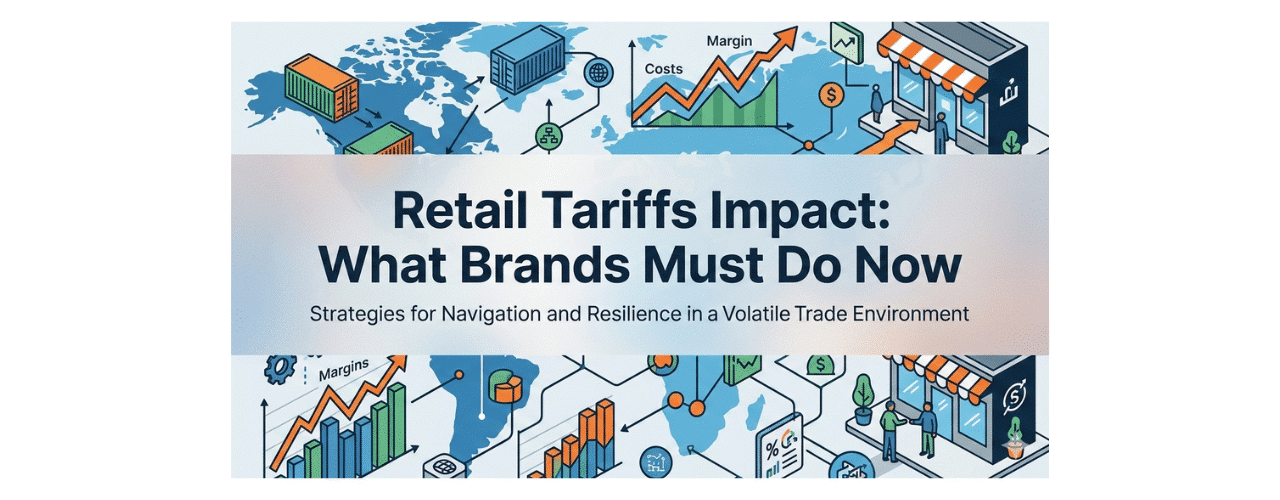
Retail Tariffs Impact: What Brands Must Do Now
-
 T-ROC Staff
-
 Mar 17, 2026
 -
 5 mins read


Retail leaders aren’t just dealing with rising costs. They’re dealing with constant change.
Tariffs have become one of the most disruptive forces in the industry. Policies shift. Costs fluctuate. Planning cycles shorten. And for many brands, the question is no longer if tariffs will impact operations — it’s how often.
Understanding the retail tariffs impact is now essential for any brand trying to protect margins, maintain consistency, and stay competitive.
Why Retail Tariffs Are Reshaping the Industry
Tariffs directly affect the cost of imported goods. That part is obvious. What’s less obvious is how quickly those cost changes ripple through the entire retail operation.
When tariffs increase, retailers must decide whether to absorb the cost or pass it on to customers. Neither option is easy. Absorbing costs compresses margins. Raising prices risks slowing demand.
Recent legal challenges and refund efforts show just how significant these costs have become across apparel, beauty, and discount retail sectors. But even when refunds are possible, new tariffs and policy changes continue to create uncertainty.
Retailers are not operating in a stable environment. They are operating in a moving one.
The Real Retail Tariffs Impact on Business Operations
Tariffs don’t just affect pricing. They influence how decisions are made across the organization.
Pricing Strategy Under Pressure
Pricing becomes more reactive when costs are unpredictable.
Retailers must constantly evaluate whether to adjust prices, offer promotions, or maintain consistency to protect customer trust. Small missteps can quickly impact perception and sales.
Supply Chain Disruption and Sourcing Shifts
Tariffs often force brands to rethink where products are sourced.
This can lead to:
-
shifting production to new regions
-
diversifying supplier networks
-
increasing inventory to avoid disruptions
Each adjustment introduces new complexity and operational risk.
Margin Compression Across Categories
For industries like apparel and footwear, where global sourcing is standard, tariffs can significantly reduce profitability.
Retailers must find ways to offset these pressures without compromising the customer experience.
Why Retailers Are Adapting to Trade Volatility
After more than a year of trade instability, many retailers are no longer reacting with urgency. They are adapting with intention.
Volatility is becoming part of the operating model.
Instead of planning for stability, brands are building strategies that assume ongoing disruption. This shift allows organizations to move faster and make better decisions under pressure.
Strategies to Manage Retail Tariffs Impact
The most successful retailers are not waiting for clarity. They are building flexibility into their operations.
Strengthen Supply Chain Flexibility
Retailers are reducing reliance on a single sourcing region and expanding supplier networks. This approach creates options when tariffs or policies shift unexpectedly.
Improve Cost Visibility and Data Accuracy
Understanding true landed cost is critical.
Retailers are investing in systems that track tariffs, duties, and logistics costs in real time. Better visibility leads to faster, more informed decisions.
Align Store Execution With Strategy
Even the best pricing or sourcing decisions can fail if they are not executed properly in stores.
Retail execution platforms help brands ensure that pricing, promotions, and merchandising are consistent across locations. Real-time visibility allows leaders to confirm that strategy is being carried out at the store level.
Focus on In-Store Conversion
When margins tighten, every customer interaction matters more.
Retailers are investing in trained associates who can explain product value, guide decisions, and increase conversion rates. Strong in-store engagement helps offset pricing pressure.
Assisted sales programs show how human interaction can improve customer confidence and drive sales, even when external costs rise.
Prepare for Tariff Compliance and Refund Processes
For brands pursuing tariff refunds, documentation is essential. Each import transaction may need to be reviewed individually. Organized records and structured processes can reduce delays and improve outcomes.
The Bigger Picture: Retail Strategy in an Uncertain Market
Tariffs are only one part of a broader shift in retail.
Supply chains are evolving. Customer expectations continue to rise. Technology is changing how decisions are made and executed.
Retail is becoming more dynamic, not more predictable. The brands that succeed will not be the ones waiting for stability. They will be the ones building systems designed to adapt.
This includes:
-
stronger data and analytics
-
more flexible operations
-
consistent store execution
-
and a continued focus on customer experience
Final Thoughts: Flexibility Is the New Advantage
Retail tariffs are not a short-term issue. They are part of a larger shift in how global retail operates.
While legal decisions or policy changes may provide temporary relief, uncertainty will remain.
The key question for retail leaders is not whether tariffs will change again.
It’s whether their business is prepared when they do.
Because in today’s retail environment, flexibility is no longer a competitive edge.
It’s a requirement.
T-ROC Editorial Team
The T-ROC editorial team brings 20+ years of retail industry expertise across brand ambassador programs, mystery shopping, retail merchandising, and managed technology solutions. Learn more about T-ROC.