





Why is Walmart Buying Shopping Malls? The Bold New Strategy for 2025
-
 T-ROC Staff
-
 Feb 18, 2026
 -
 3 mins read
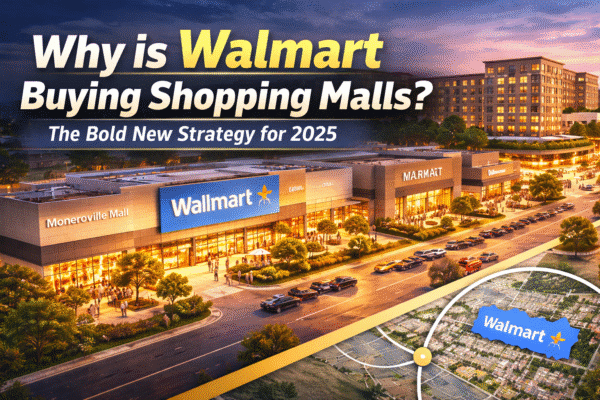
The retail world was caught off guard in early 2025 when Walmart made a move usually reserved for real estate investment trusts (REITs): it purchased a 1.2 million-square-foot shopping mall. The Walmart shopping mall purchase of the Monroeville Mall near Pittsburgh for $34 million signals a major shift in how the world’s largest retailer views physical space.
For an organization with $260 billion in assets, a $34 million deal is a drop in the bucket. However, the strategy behind it reveals a sophisticated approach to land scarcity, logistical efficiency, and the future of “phygital” retail.
A “Brilliant” Real Estate Play
Industry analysts have labeled the move as “absolutely brilliant,” particularly because the Monroeville Mall sits at a vital junction of major highways. In land-constrained markets, finding a large, developable tract of land is nearly impossible.
By executing a Walmart shopping mall purchase, the company gains a three-point head start:
-
Established Infrastructure: Roads, utilities, and parking are already in place, saving millions in development costs.
-
Regulatory Ease: These sites are already zoned for retail use, bypassing many of the hurdles of “greenfield” development.
-
Strategic Control: Walmart now dictates which competitors can operate nearby and how the property evolves.
From Shopping Aisles to Mixed-Use Hubs
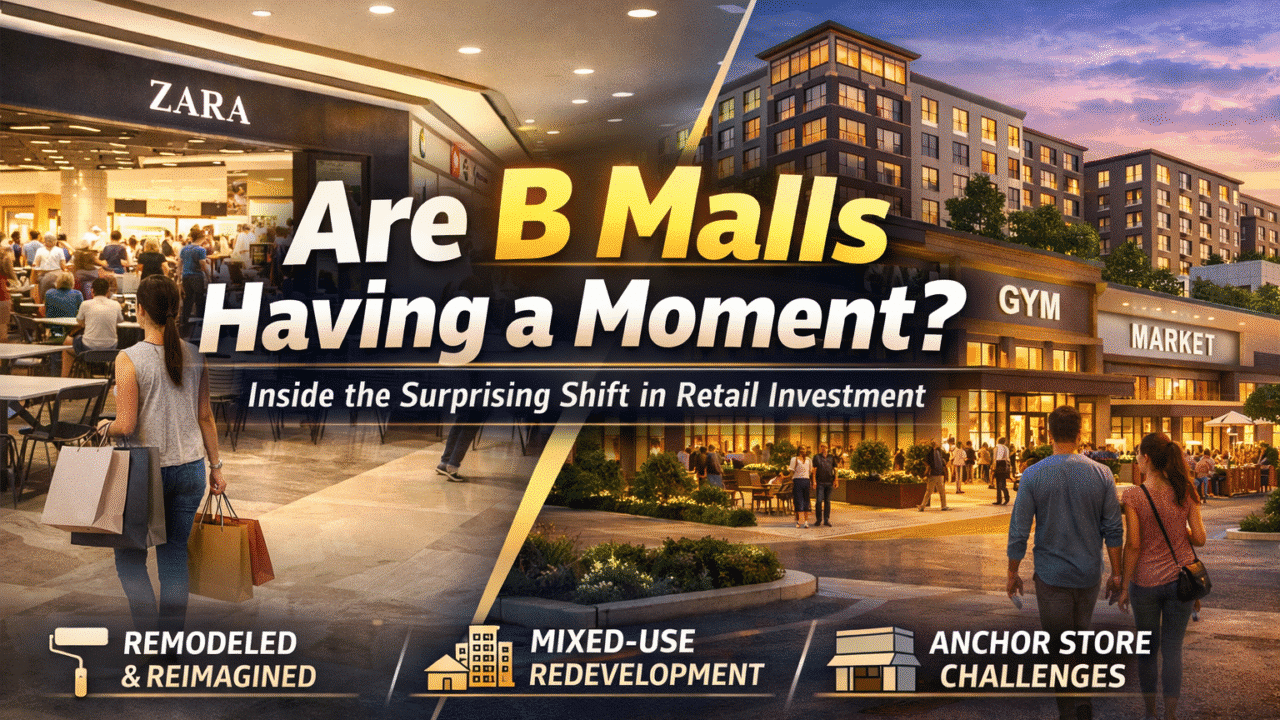
Walmart isn’t just looking to be a mall landlord. In partnership with Cypress Equities, the retailer is planning a total repositioning of the site. Early indicators suggest a shift toward mixed-use redevelopment, which could include:
-
Retail & Entertainment: Modernizing the tenant mix to include experiential dining and social spaces.
-
Residential & Office: Creating a “10-minute neighborhood” where people live and work on-site.
-
Fulfillment Centers: Leveraging the massive square footage for “last-mile” delivery hubs to support online orders.
This aligns with a broader trend seen in 2025: the “Retail Village.” According to data from Placer.ai, visits to indoor and outdoor malls are rising, but only for centers that offer more than just stores.
The Logistical Advantage
While traditional malls struggle with declining department store anchors, Walmart sees an opportunity. Because many anchor stores own their land, a struggling mall often has fewer legal encumbrances, making it “ripe” for a buyout below replacement cost.
For Walmart, this isn’t about saving the mall—it’s about securing a “commercial hub” that can serve multiple purposes. Whether it becomes a Supercenter, a Sam’s Club, or a massive automated fulfillment center, the physical footprint is the prize.
Challenges and the “IKEA Model”
Walmart isn’t the first to try this. IKEA has successfully managed a large real estate arm for years, owning many of the malls where its stores reside. This “landlord-retailer” hybrid model allows for diversified revenue streams through tenant rent while ensuring the primary brand remains the destination’s heart.
The challenge? Retail is complex. Branching into residential and hospitality management requires a different set of muscles. The industry will be watching closely to see if Walmart can scale this “Pittsburgh experiment” to other underperforming B-tier malls across the country.
Conclusion: The New Face of Retail
The Walmart shopping mall purchase is a reminder that in 2025, real estate is as much a part of the retail game as the products on the shelves. By transforming dying malls into vibrant community hubs, Walmart is ensuring its physical presence remains indispensable in an increasingly digital world.