





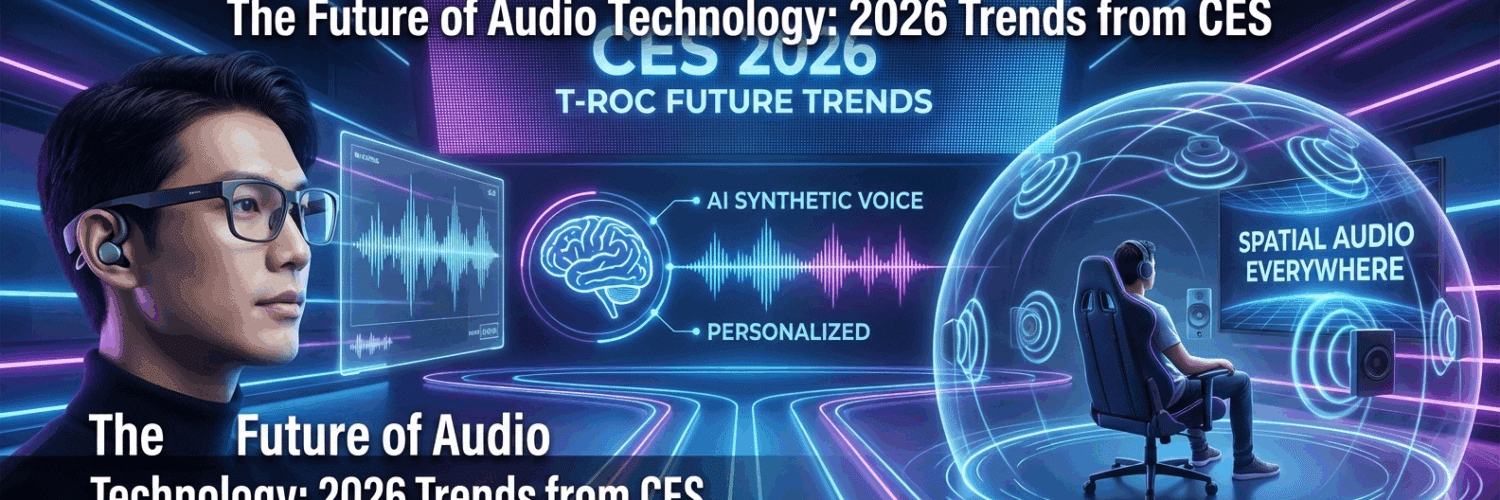
The soundscape of 2026 is no longer a background element; it is an intelligent, personalized, and highly monetizable ecosystem. As demonstrated at the latest CES 2026, the future of audio technology is shifting away from static hardware and toward “empathetic” software that understands context, mood, and environment.
For retailers and brands, this evolution represents a massive opportunity to engage consumers in a “phygital” space where sound bridges the gap between the physical and digital worlds.
1. The Rise of “Invisible” and Open-Ear Audio
One of the most visible (or invisible) trends at CES 2026 was the move toward open-ear earbuds and ultra-thin audio chips. Unlike traditional noise-canceling bubbles, open-ear technology allows users to remain present in their surroundings while enjoying high-fidelity sound.
-
Smart Glasses Integration: New audio chips, such as the xMEMS Sycamore-N, are replacing bulky drivers, allowing smart glasses to become thinner and lighter while delivering spatial audio.
-
Situational Awareness: For the “always-on” consumer, open-ear design provides a safer way to listen to podcasts or take calls during commutes and outdoor activities.
2. AI and the Era of Synthetic Voice
Artificial Intelligence is no longer just an editor; it is a creator. In 2026, the audio industry is witnessing a revolution in how content is produced and consumed through synthetic voice and real-time personalization.
-
Emotional Intelligence: AI models now understand the emotional context of a conversation, adjusting tone, pitch, and pace to sound more human and less robotic.
-
Hyper-Personalization: Imagine a podcast that automatically summarizes its key points in your preferred “voice style” or an audiobook that translates into your native tongue while keeping the original narrator’s unique timbre.
-
Industrial Applications: Beyond entertainment, hands-free voice interfaces are becoming standard in logistics and maintenance, allowing workers to access manuals and log data entirely through audio.
3. Spatial Audio Everywhere: The New Standard
What was once a premium feature for high-end home theaters has become the baseline for all consumer audio. Spatial audio technology now recreates three-dimensional sound fields that shift naturally as the listener moves.
-
Modular Home Theaters: Brands are moving toward wireless, modular systems that can be “built” over time. A single soundbar can now pair with “Music Studio” style speakers to create a professional-grade theater experience without a single wire.
-
Gaming Immersion: Audio in 2026 is becoming a primary sensory tool for gamers, with spatial sound providing competitive advantages by pinpointing in-game movements with pinpoint accuracy.
Monetizing the Soundscape: Hybrid Models
The future of audio technology is also redefining how brands make money. We are moving beyond the binary of “ads vs. subscriptions” toward hybrid monetization:
-
Micro-transactions: Paying a small fee for “early access” to a podcast episode.
-
Tiered Memberships: Gated “bonus” video content for audio subscribers.
-
Programmatic Personalization: Ads that change their sound design based on the listener’s local weather or current activity (e.g., a “high-energy” ad for a morning workout).
What This Means for Retailers
For retailers, the challenge is no longer just selling a box; it is demonstrating a lifestyle. To succeed in 2026, brands must:
-
Enhance In-Store Demos: Consumers need to hear the difference in spatial audio. This requires expertly trained field teams and interactive displays.
-
Educate on “Phygital”: Sales associates must be able to explain how audio-first devices (like smart glasses) integrate into a customer’s existing digital ecosystem.
Conclusion
The future of audio technology is defined by harmony—between intelligence and intuition, and between the technology we use and the experiences we feel. As audio becomes more integrated into our lives, the most successful brands will be those that treat sound not as a feature, but as a connection.
T-ROC Editorial Team
The T-ROC editorial team brings 20+ years of retail industry expertise across brand ambassador programs, mystery shopping, retail merchandising, and managed technology solutions. Learn more about T-ROC.