
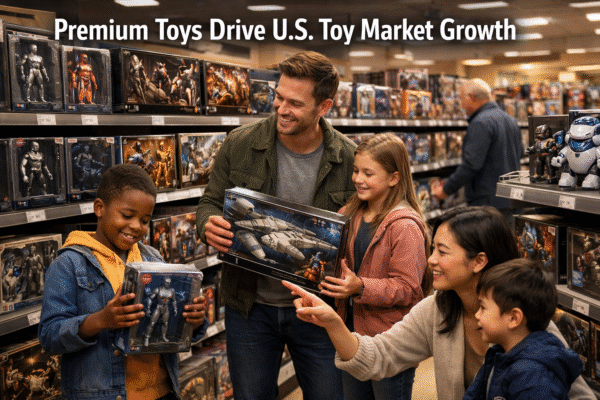


Premium Toys Drive U.S. Toy Market Growth
-
 T-ROC Staff
-
 Mar 3, 2026
 -
 3 mins read
The U.S. toy industry has returned to growth after two years of stagnation.
In 2025, total dollar sales rose 6% year over year. Average selling prices increased 4%. Units sold climbed 3%.
The biggest surprise? Premium toys are leading the rebound.
Why Premium Toys Are Winning
Shoppers are signaling a clear shift.
Toys priced between $30 and $69.99 grew 18% year over year. That was the fastest growth of any pricing tier.
By contrast, toys under $5 and those priced between $15 and $19.99 saw the steepest declines.
Consumers are not pulling back. They are trading up.
Premium toys offer:
-
Stronger brand recognition
-
Collectible appeal
-
Higher perceived value
-
Feature-rich experiences
This signals something deeper than pricing behavior. It reflects emotional purchasing.
Licensing and Fandom Fuel Demand
Licensed and franchise-based toys are shaping the current cycle.
Entertainment, sports, and gaming properties are driving double-digit growth across several brands.
One standout example is Pokémon, which surpassed $2.5 billion in U.S. toy sales last year, growing nearly 90% year over year. It became the first brand in two decades to exceed the $2 billion mark.
The takeaway is clear: fandom converts into revenue.
When toys connect to entertainment ecosystems, they tap into built-in communities.
Category Winners and Losers
Growth was not uniform.
Six of eleven supercategories posted gains. Games and puzzles led the surge, up 37% in dollar sales.
Meanwhile:
-
Outdoor and sports toys declined
-
Plush products softened
-
Doll sales fell
Seasonal disruption early in the year impacted weather-sensitive categories. But the stronger pattern centers on value perception and emotional connection.
Premium toys tied to storylines, competitive gaming, and collectible formats outperformed.
What This Means for Retailers
Retailers must rethink assortment strategy.
Premium toys require:
-
Better merchandising visibility
-
Strong in-store storytelling
-
Staff trained on franchise context
-
Real-time inventory tracking
Higher price points increase risk if stock-outs occur. Precision execution matters.
Retail leaders using visibility platforms like Retail360 can align product flow, compliance, and display execution to protect margin on premium items .
If premium toys are driving growth, shelf discipline becomes non-negotiable.
Tariffs, Inflation, and Uncertainty
While premium toys are rising, uncertainty remains.
Tariffs have not materially impacted consumer pricing yet. However, inflation, credit pressure, and confidence shifts may shape discretionary spending.
Brands that balance premium innovation with evergreen play patterns will be more resilient.
Emotional resonance remains the deciding factor.
Strategic Implications for Toy Brands
Winning brands share three traits:
-
Strong licensing partnerships
-
Continuous innovation within franchises
-
Community-building beyond the shelf
Premium toys are not simply higher-priced items. They are higher-engagement products.
That distinction matters.
Retailers who support that engagement through merchandising, activation, and execution will outperform competitors who rely solely on price promotions.
FAQ: Premium Toys and Market Growth
Why are premium toys growing faster than lower-priced toys?
Consumers are prioritizing collectible, licensed, and feature-rich products that deliver emotional value and longer-term play engagement.
Are consumers spending more overall?
Yes. Both average price and unit sales increased, signaling broader demand recovery rather than simple price inflation.
Will premium growth continue in 2026?
Momentum remains strong, but economic variables like tariffs and consumer confidence will influence trajectory.
Final Perspective
Premium toys are not a niche trend. They are driving the current phase of toy market growth.
Higher price points, strong franchises, and emotional connection are reshaping how families spend in this category.
The opportunity for retailers and brands is clear:
Activate fandom. Protect execution. Deliver value beyond the box.