






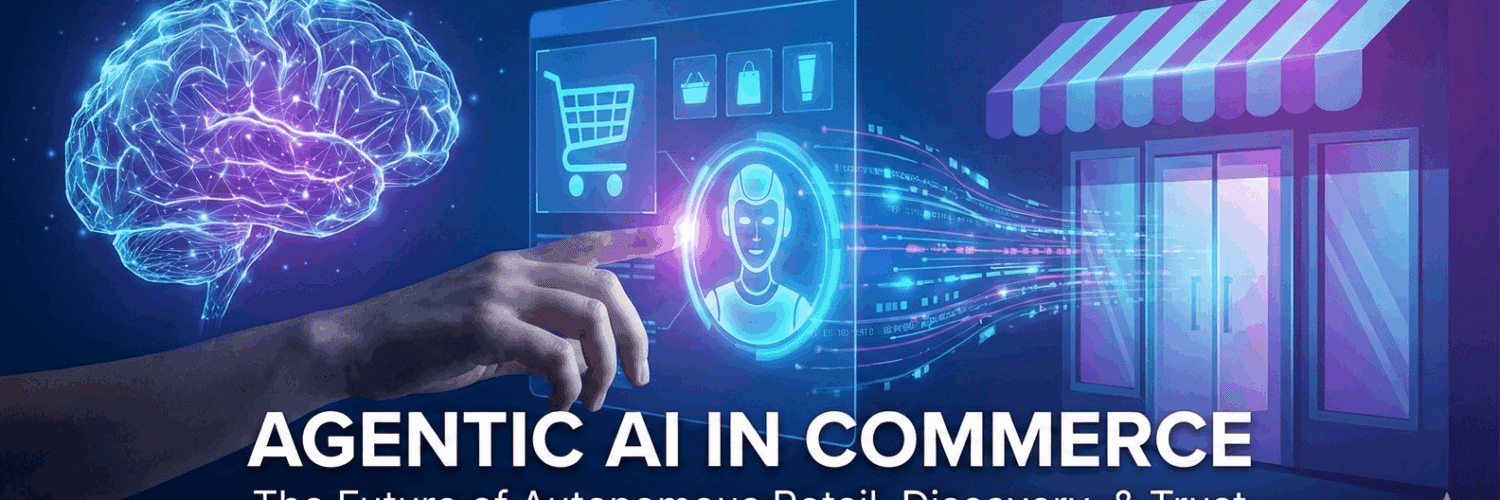
Agentic AI in Commerce: The Next Frontier of Retail Discovery and Trust
-
 T-ROC Staff
-
 Jan 28, 2026
 -
 4 mins read


The buzz at NRF 2026 was undeniable, and it centered on one transformative shift: Agentic AI in commerce. We are moving past the era of “chatbots” that simply answer questions. We have entered the age of AI agents that act on intent, make decisions, and even complete transactions on behalf of consumers.
For retailers, this isn’t just another tech upgrade—it’s a fundamental reshaping of how you find, sell to, and keep your customers.
From Search Boxes to Shopping Assistants
Historically, the customer journey began with a search query or a visit to a marketplace. Today, that journey increasingly starts with an AI assistant like ChatGPT, Perplexity, or a brand-specific shopping agent.
These agents don’t just provide a list of links; they reason through a customer’s needs. If a shopper says, “I need an outfit for a beach wedding in Miami next week,” an agentic system evaluates weather data, style preferences, and shipping speeds to present a curated solution.
To thrive, brands must ensure their products are visible and “understandable” to these machines. This is where the Model Context Protocol (MCP) becomes critical. By implementing tools like the storefront MCP server, retailers can safely share real-time data with third-party AI agents, ensuring their products are the ones being recommended.
Why Product Data is Your New Currency
In an agent-driven world, your product descriptions are no longer just for human eyes—they are operational infrastructure. An AI agent cannot recommend a product it cannot interpret.
This has birthed Generative Engine Optimization (GEO). Unlike traditional SEO, which focuses on keywords and backlinks, GEO focuses on:
-
Data Structure: Is your data enriched with the attributes an AI needs (e.g., material, sustainability, exact dimensions)?
-
Accuracy: Does your inventory signal reflect real-time availability?
-
Trust Signals: Are your reviews and specifications verified?
Using tools like a Catalog Optimization Agent, retailers can now clean and enrich millions of items 70% faster than manual teams. In the race for visibility, the brand with the cleanest data wins.
Payments and Returns: The Invisible Backbone
As commerce detaches from the traditional storefront, the way we pay must evolve. We are moving toward autonomous commerce, where consumers set spending limits for their AI agents to execute purchases.
New payment rails like FedNow and stablecoins are making these transactions faster and cheaper. For retailers, the goal is “frictionless.” If an agent has to jump through a dozen hoops to complete a checkout, the sale is lost. A headless, “no-code” payment framework allows your store to accept any payment method an agent might use, from digital wallets to bank-based transfers.
The Strategic Value of Returns
With global returns exceeding $1.9 trillion, the “keep, reject, or return” decision is being handed over to AI. By integrating ERP data with commerce platforms, retailers can use AI to decide—in real-time—whether to offer a refund, a replacement, or a “keep it” credit based on a customer’s lifetime value.
Trust: The Human Responsibility
As AI agents take over the “heavy lifting” of shopping, the retailer’s primary job shifts to becoming a trust custodian.
Customers need to know that when an agent makes a purchase, their data is secure and the product will arrive as described. At T-ROC, we believe that while technology drives efficiency, the human element—governance, brand integrity, and real-world execution—is what builds long-term loyalty.
Preparing Your Strategy for 2026
The winners in this new era won’t be those with the flashiest AI demos, but those who build the right foundations today.
-
Structure your data for machine readability.
-
Adopt open protocols (like MCP) to interact with external agents.
-
Modernize your payment stack to handle autonomous transactions.
Agentic AI is making commerce more personal and efficient. The question is: is your brand ready to be chosen by the machines?